
1. The record this essay is drawn from
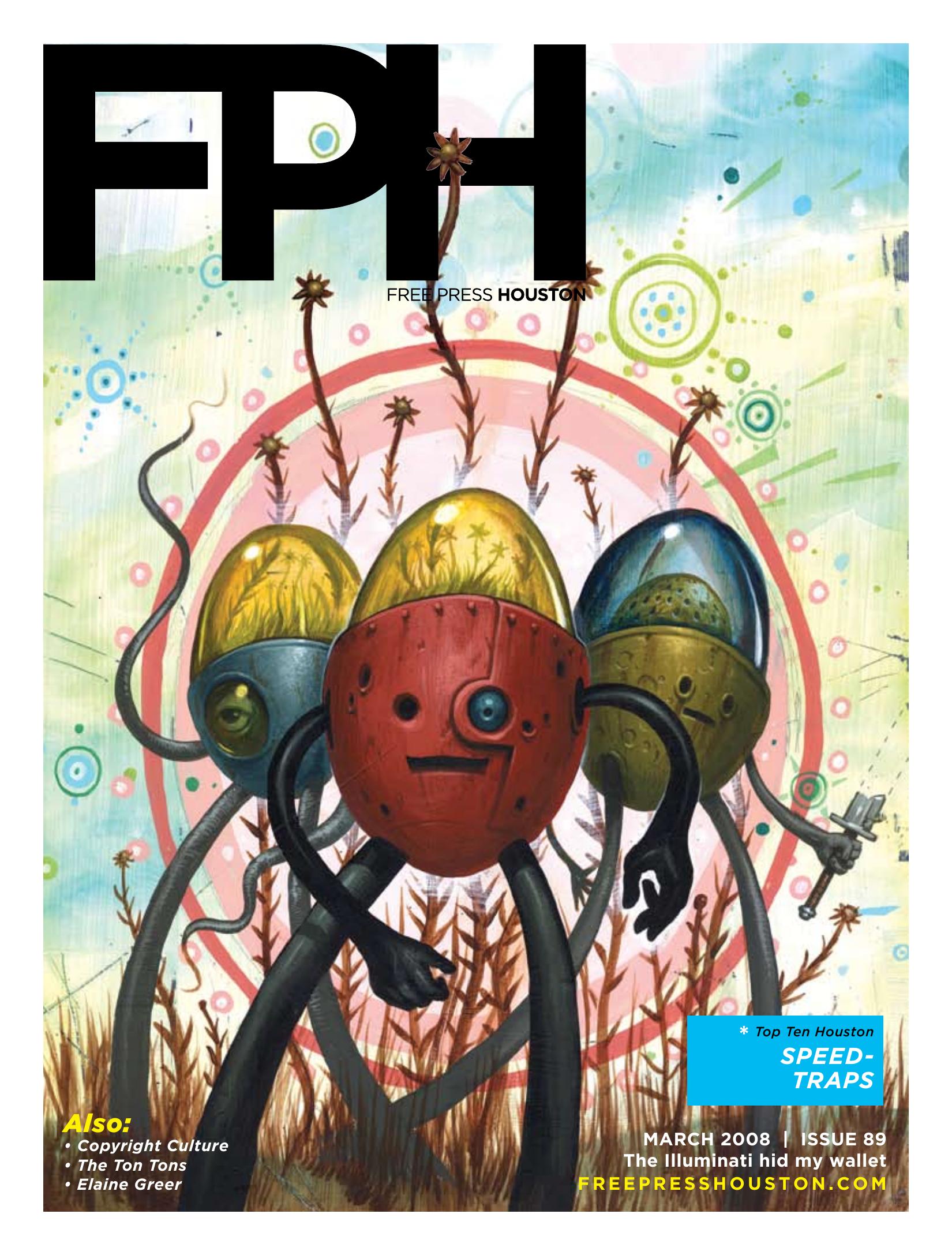
Free Press Houston was an independent Houston newspaper that published from 2003 to 2018. What survives of it in this archive is uneven, and the shape of that unevenness matters for anything said about the institution. The issue index catalogues 203 monthly slots across the run and holds a digitised object for 62 of them, running from 2005.05b to 2015.10. The recovered article corpus is much larger — 4,142 public records, almost all of them retrieved from the paper's former website rather than transcribed from print — and it is thinnest in the earliest years. 9 staff boxes have been transcribed word for word into the masthead census, the earliest from the 2010.08 issue and the latest from 2015.10. Alongside the paper's own pages the archive holds the production record of the events it ran: posters, site and evacuation maps, stage guides, billboard proofs, licensing documents and photographs, catalogued as objects and gathered under the collections for each event. Outside reporting from the Houston Press, the Houston Chronicle, the Houston Business Journal and national music titles is catalogued on the timeline and on the paper's entity record, and is cited here only for what it states.
Two consequences follow. First, the years before 2007 are documented here by the fact of publication and by a handful of recovered web records, not by issues in hand; the essay therefore says little about them. Second, the festival years are documented far more densely than the paper's early life, because the festivals generated files — permits, maps, contracts, artwork — of a kind a monthly newspaper does not. The archive's picture of the institution is sharpest where the institution had become something other than a newspaper.
2. A monthly, from 2003
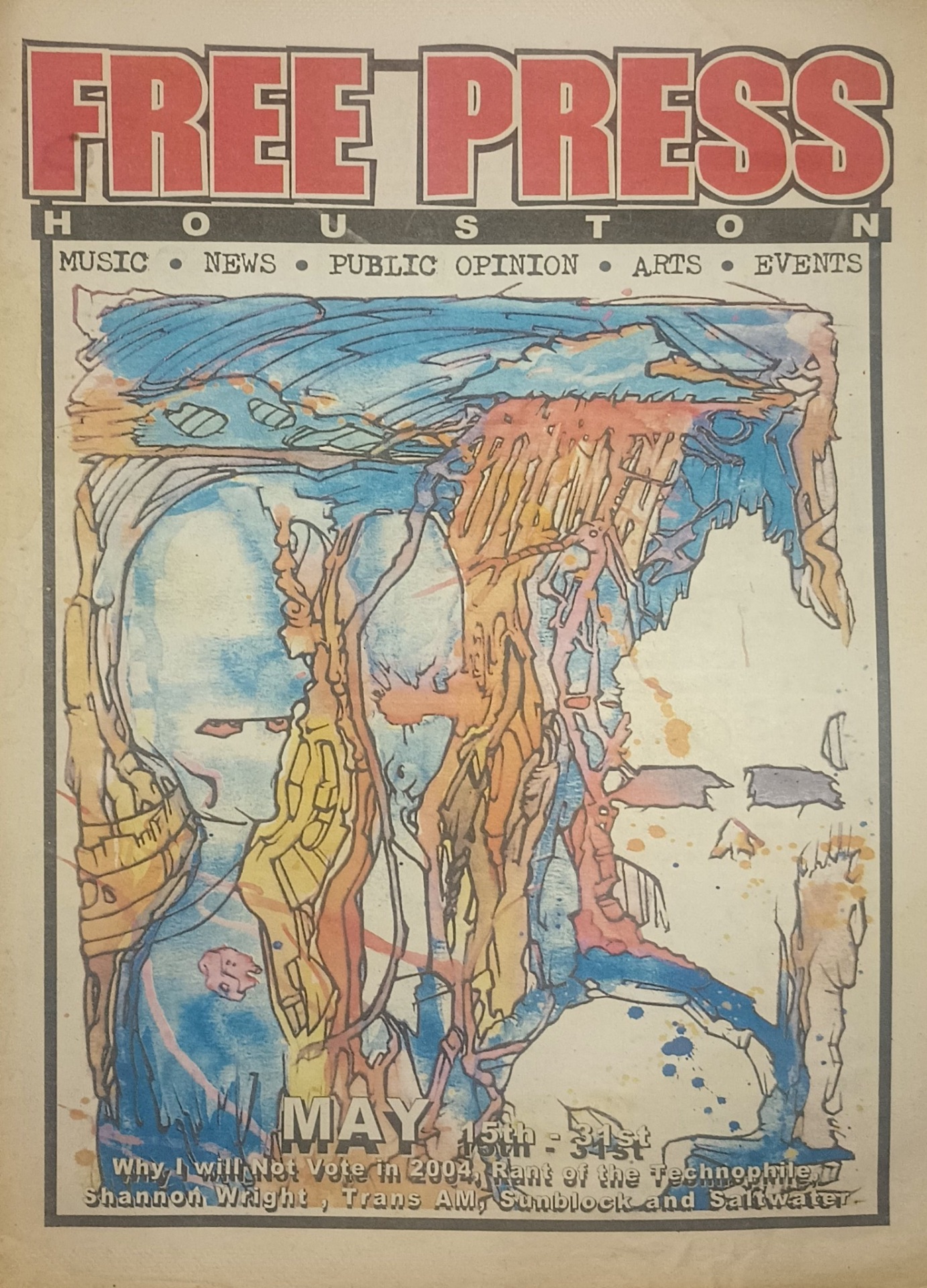
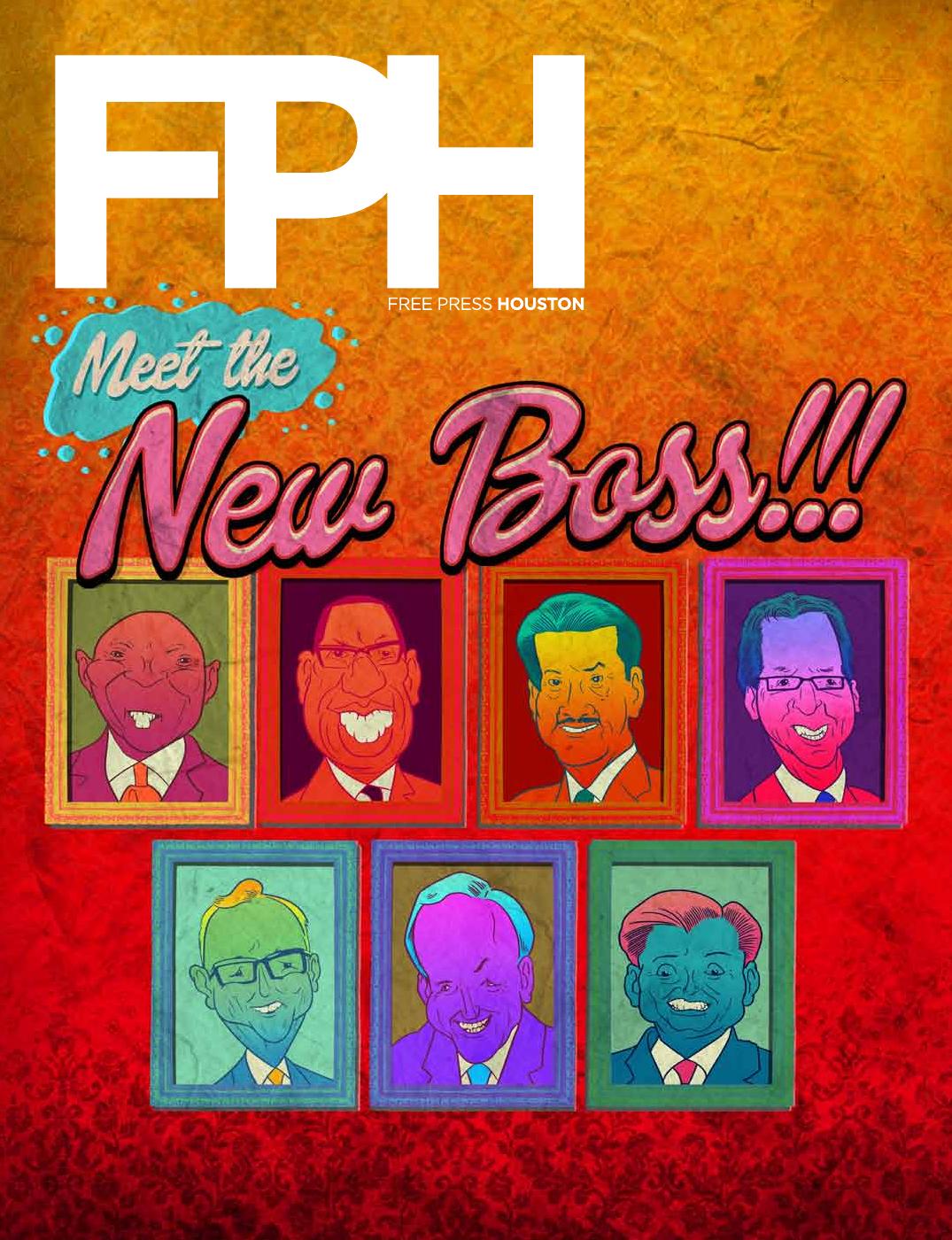
The paper's own run begins in 2003; the archive's entity record describes it as an independent Houston monthly published 2003–2018, and its founder and publisher, Omar Afra, is recorded as having founded it that year and published it through its close. The transcribed staff boxes bear this out for the years they cover. He is printed as Publisher in every one of the 9 transcribed boxes (2010.08, 2012.11, 2013.08, 2014.07, 2014.08, 2014.12, 2015.01, 2015.03, 2015.10) and additionally as Managing Editor in the 2010.08 issue. The recovered corpus carries 29 pieces under his own byline, indexed in the bibliography; they are a small share of the paper's output, which is the point. He was the publisher of a paper written by other people.
Andrea Afra is recorded by the archive as co-founder of the paper, a role stated to it by the publisher rather than printed in a staff box, and the held boxes carry her under a sequence of working titles that trace the paper's own administrative growth: Administrative Director in 2010.08, Copy Editor in 2012.11 and 2013.08, and Web / Digital Media together with Associate Editors from 2014.07 onward, alongside the Designers & Illustrations and Contributors & Staff Writers lists. Her finding aid sets those appearances out issue by issue.
The boxes also describe the organisation around them. Set side by side, the first and last transcribed boxes show which functions the paper added over those years and how its writers' list changed:
| Heading | 2010.08 | 2015.10 |
|---|---|---|
| Publisher | 1 | 1 |
| Associate Editors | 4 | 2 |
| Managing Editor | 1 | 1 |
| Administrative Director | 1 | — |
| Contributors & Staff Writers | 10 | 19 |
| Intern Mujahedeen | 1 | — |
| Layout Design | 1 | 1 |
| Photographers | 2 | 1 |
| Wolf | 1 | — |
| Designers & Illustrations | 4 | — |
| Delivery | 6 | — |
| Cover Illustration | 1 | — |
| Business Manager | — | 1 |
| Web / Digital Media | — | 1 |
| Designers & Illustrators | — | 4 |
| Free Press TV Creative Director | — | 1 |
| Intern Mujahedeens | — | 3 |
| Distribution | — | 1 |
| Staff Dog | — | 1 |
Across the 9 boxes the archive counts 28 distinct role headings. The 2015.10 box carries headings the 2010.08 box does not — Business Manager, Web / Digital Media, Designers & Illustrators, Free Press TV Creative Director, Intern Mujahedeens, Distribution, Staff Dog — and its Contributors & Staff Writers list runs to 19 names against 10. Read in sequence the boxes record a small monthly acquiring the functions of a media company — video, web, business management — while its writing staff grew.
What the paper printed is legible from the recovered corpus even where the issues themselves are missing. Of the records that carry a section label, Music (809), Film (608) and Art (374) are the largest, followed by the civic sections — Editorial (153), Local and State (153), News (113) and Politics (89). The paper carried recurring features of its own, of which the reader-voted Worst of Houston is the best preserved, and it commissioned covers and illustration from working Houston artists, which is why so much of what survives is visual. The companion essay Fifteen Years of Houston in Print gives the full account of the corpus; this one is concerned with what the organisation did beyond it.
3. Westheimer Block Party, from 2005
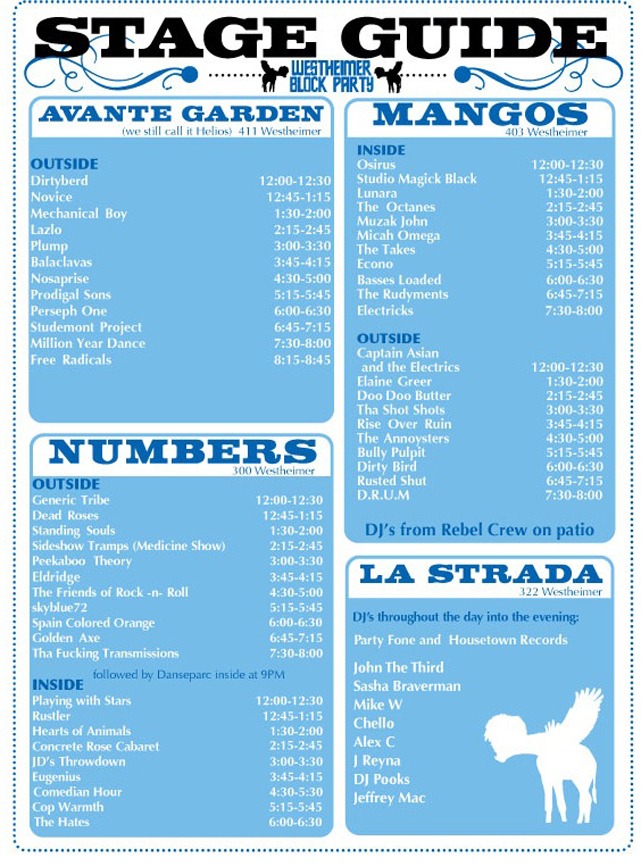
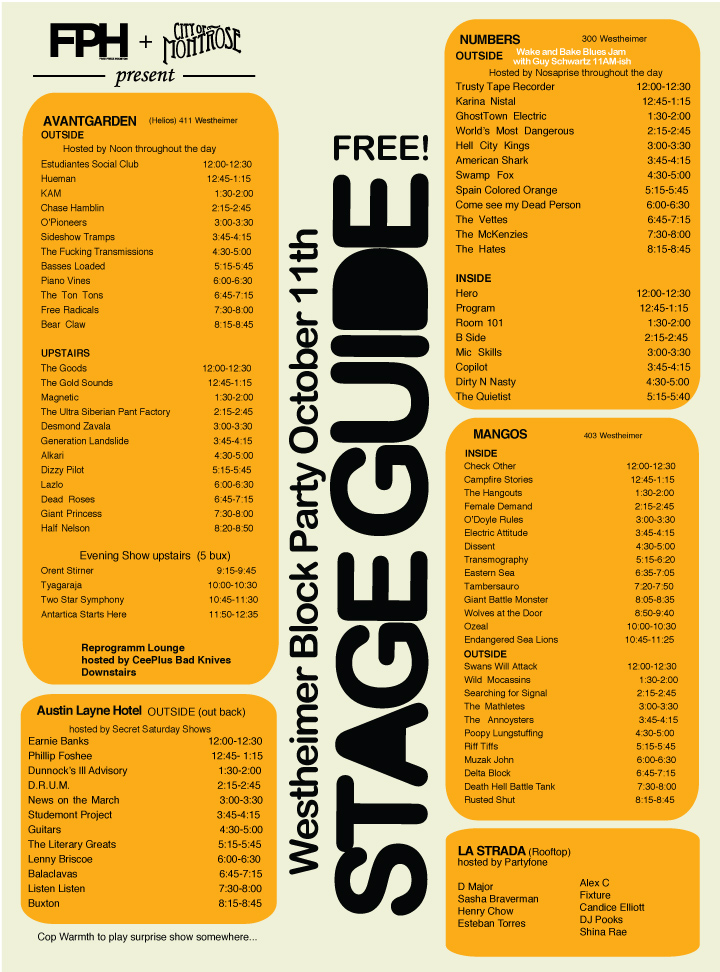
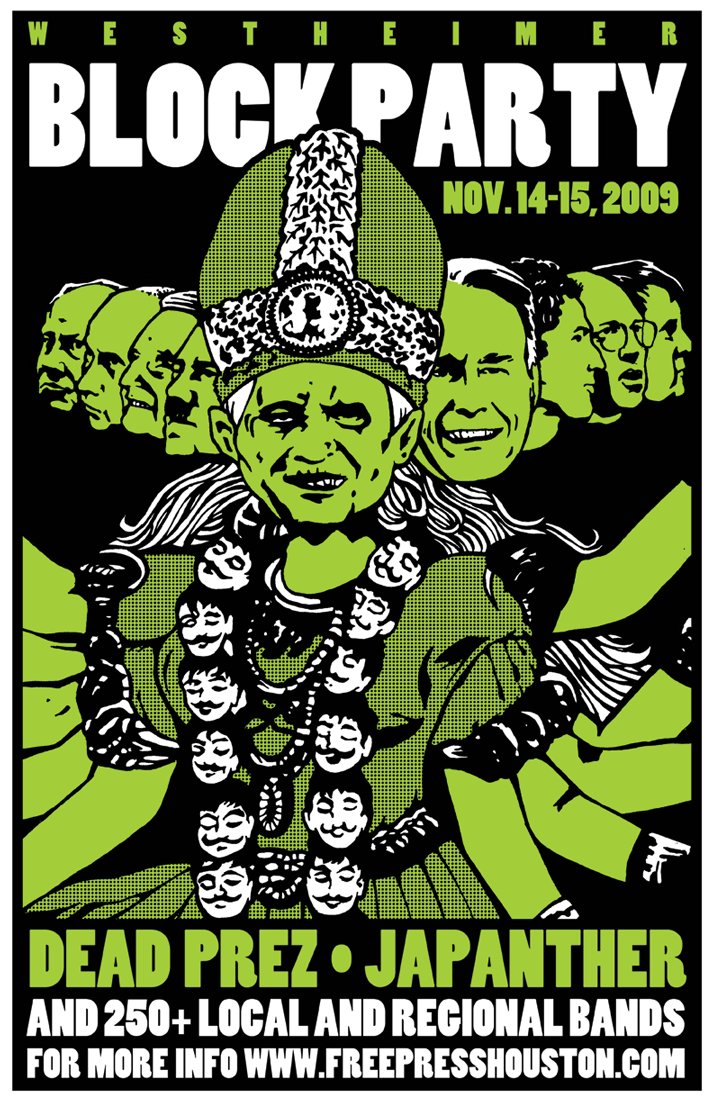
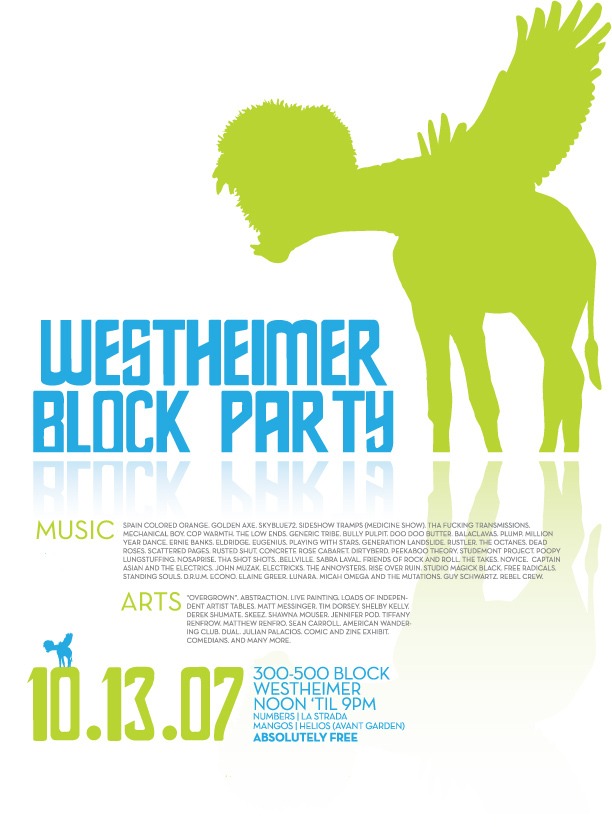
The first extension of the paper into the street is dated by the archive's collection record to 2005. Free Press Houston launched the Westheimer Block Party as an attempt to revive something of the older Westheimer Street Festival; lacking the means or permission to close Westheimer itself, it compressed the event around the intersection of Westheimer and Taft, using stages inside and outside Numbers, AvantGarden (then Helios), Mango's and La Strada, together with neighbouring parking lots. The archive's edition records establish 8 dated editions, all placed on the 300–500 block of Westheimer:
| Edition | Dates | Site |
|---|---|---|
| Westheimer Block Party, 2005 — “West Fest Compressed” | October 15, 2005 | Helios (411 Westheimer), Numbers (300 Westheimer), Mango's (403 Westheimer), Imagine That (2402 Montrose) |
| Westheimer Block Party, spring 2006 | May 27, 2006 | Westheimer between Yoakum and Taft — Black Widow Pub, Helios, Mango’s, La Strada and Numbers |
| Westheimer Block Party, fall 2006 | November 4, 2006 | Helios, La Strada, Mango’s and Numbers, Westheimer at Taft |
| Westheimer Block Party, fall 2007 | October 13, 2007 | 300–500 block of Westheimer |
| Westheimer Block Party, spring 2008 | April 12, 2008 | 300–500 block of Westheimer |
| Westheimer Block Party, fall 2008 | October 11, 2008 | 300–500 block of Westheimer |
| Westheimer Block Party, spring 2009 | March 28, 2009 | 300–500 block of Westheimer |
| Westheimer Block Party, fall 2009 | November 14, 2009 — November 15, 2009 | 300–500 block of Westheimer |
The Houston Press reported the event contemporaneously — a same-week report from the Numbers, Mango's and Avant Garden stages (Yesterday afternoon: Westheimer Block Party at Numbers, Mango's and Avant Garden) and, in November 2009, a note that the edition then closing would be the last one for now. What the archive holds of the party is production material rather than press: posters, stage guides, site and evacuation maps, club-tech graphics, and a montage of the November 2009 edition. The collection note, which is written from the producer's account, says plainly that the Block Party was where the paper learned stage management, artist booking, crowd control and logistics, and that those lessons were the production foundation for what followed.
4. Free Press Summer Fest, 2009–2017
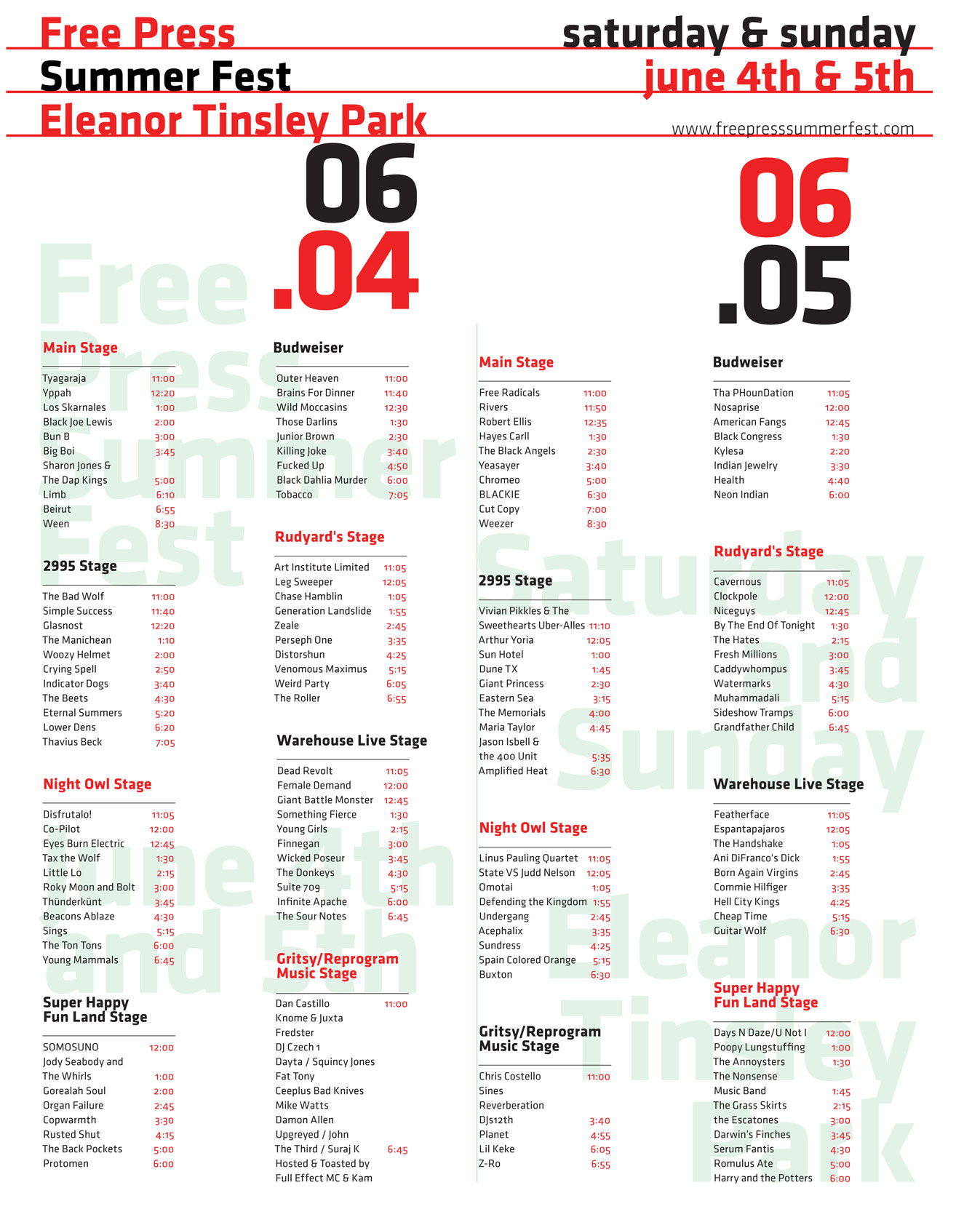
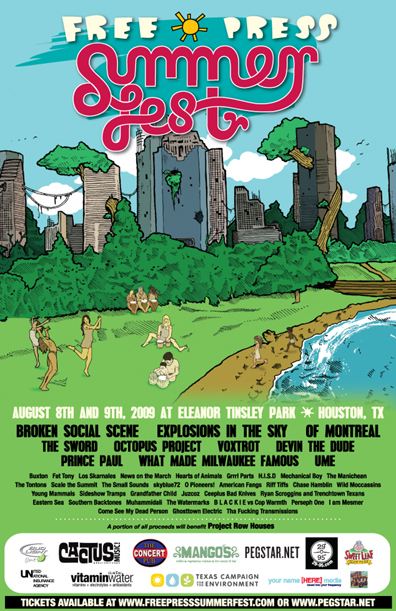
Free Press Summer Fest began in 2009 as a collaboration between Free Press Houston and the Houston concert promoter Pegstar, growing, according to the collection record, out of discussions about expanding the scale of the paper's outdoor music events. The inaugural two-day festival was held August 8–9 at Eleanor Tinsley Park; the Houston Press reported from the park that weekend (Aftermath: Free Press Summer Fest at Eleanor Tinsley Park) and later published an account of how the first edition came together. The archive's edition records run for 9 consecutive years, 2009–2017, and where a dated document establishes the site they place it:
| Edition | Dates | Site |
|---|---|---|
| Free Press Summer Fest 2009 | 2009 | — |
| Free Press Summer Fest 2010 | 2010 | — |
| Free Press Summer Fest 2011 | June 4, 2011 — June 5, 2011 | Eleanor Tinsley Park, Buffalo Bayou |
| Free Press Summer Fest 2012 | 2012 | — |
| Free Press Summer Fest 2013 | 2013 | — |
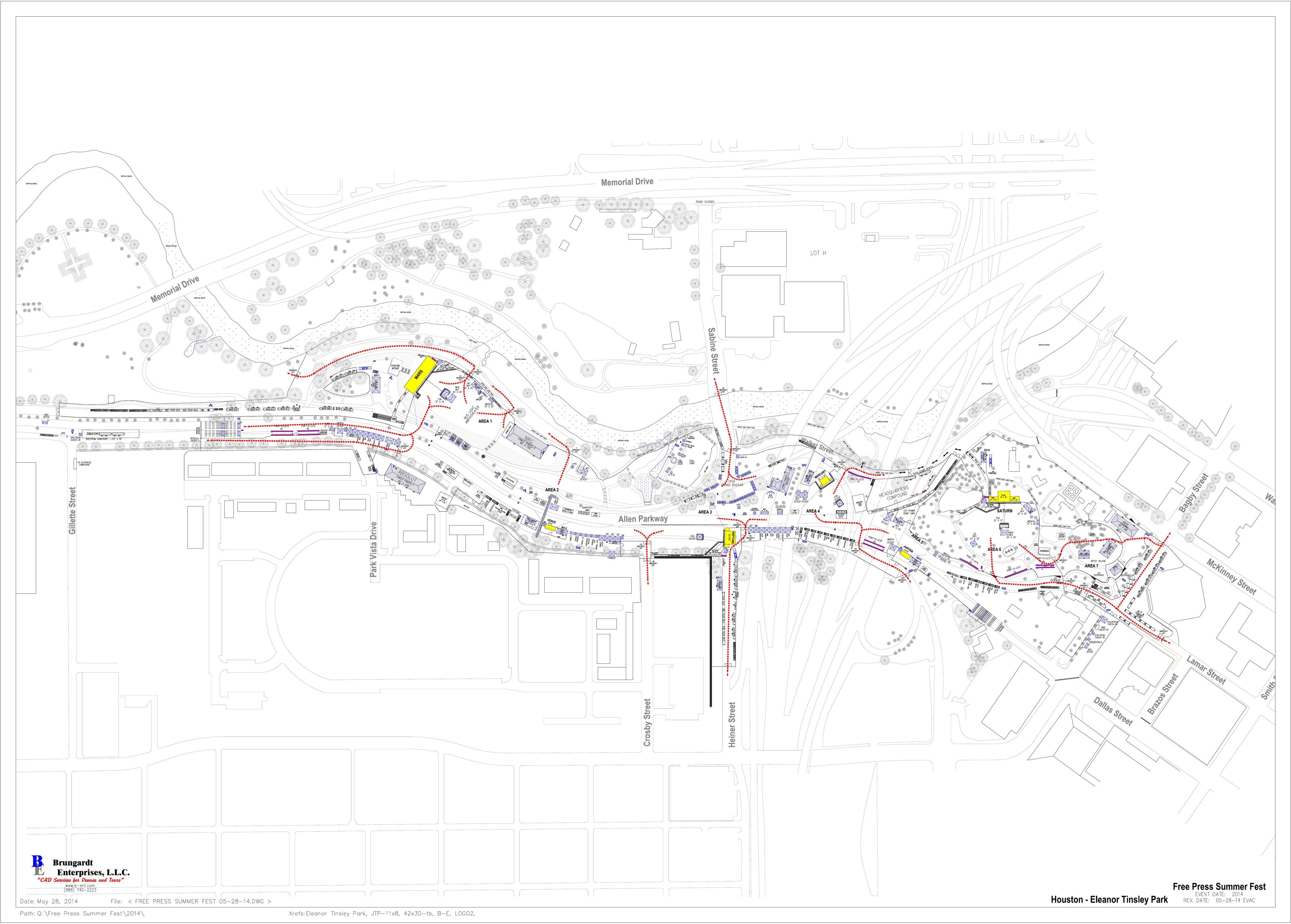
| Free Press Summer Fest 2014 | May 31, 2014 — June 1, 2014 | Eleanor Tinsley Park |
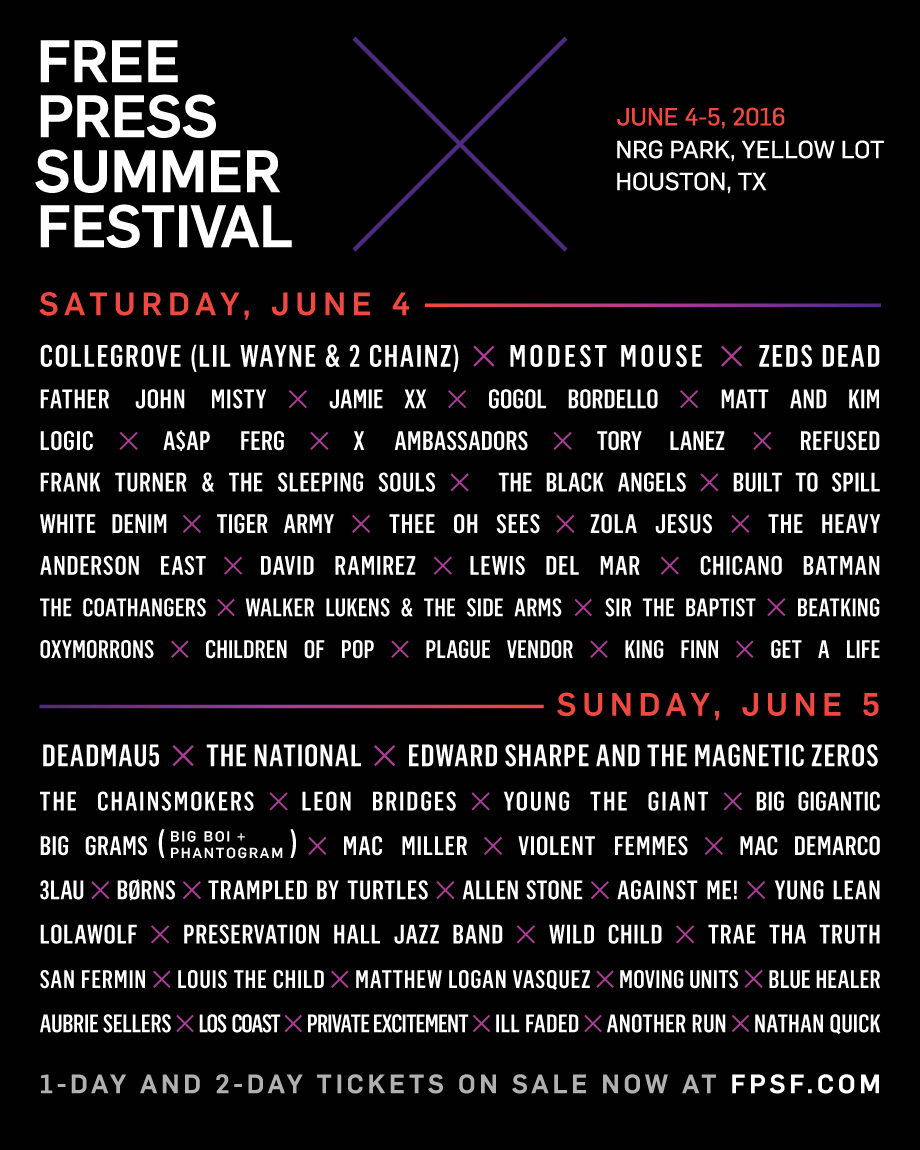
| Free Press Summer Fest 2015 | June 6, 2015 — June 7, 2015 | NRG Park, Yellow Lot |
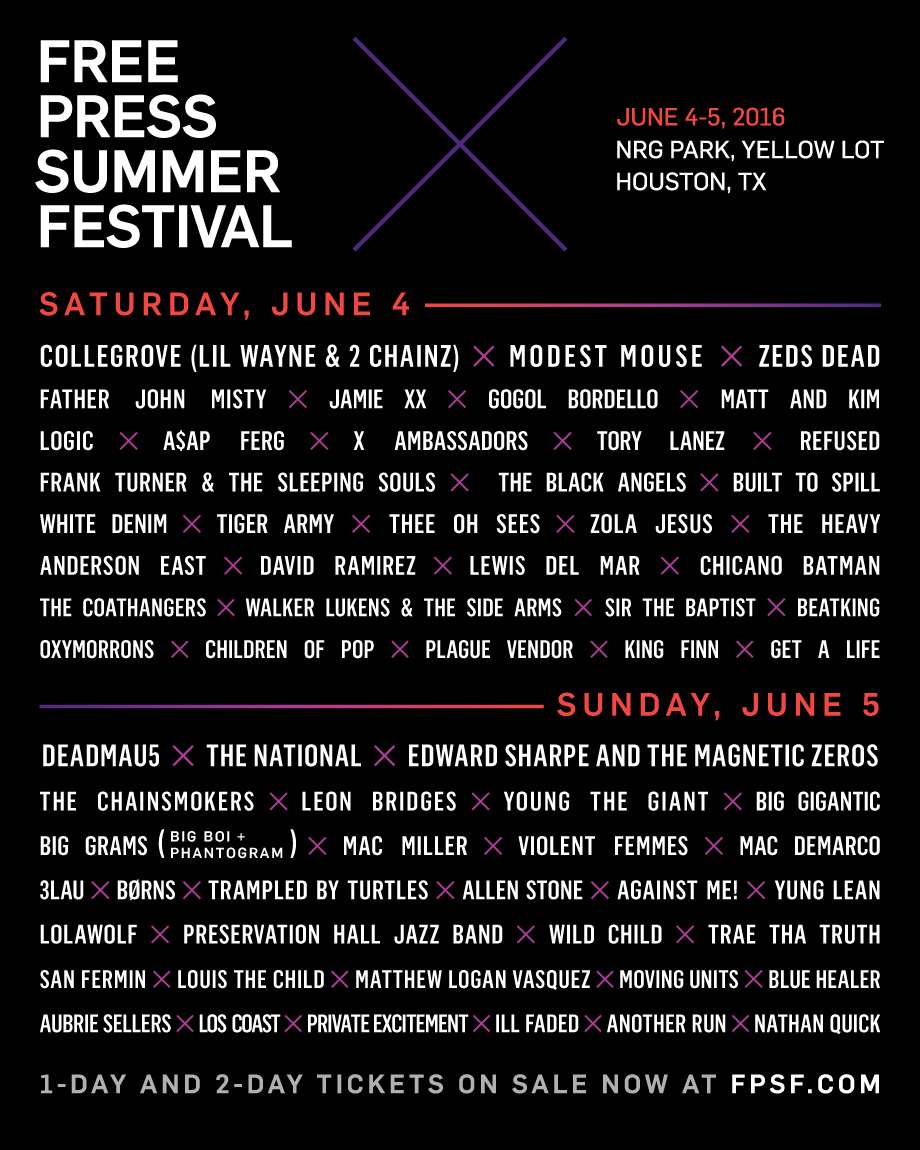
| Free Press Summer Festival 2016 | June 4, 2016 — June 5, 2016 | NRG Park |
| Free Press Summer Fest 2017 | June 3, 2017 — June 4, 2017 | Eleanor Tinsley Park |
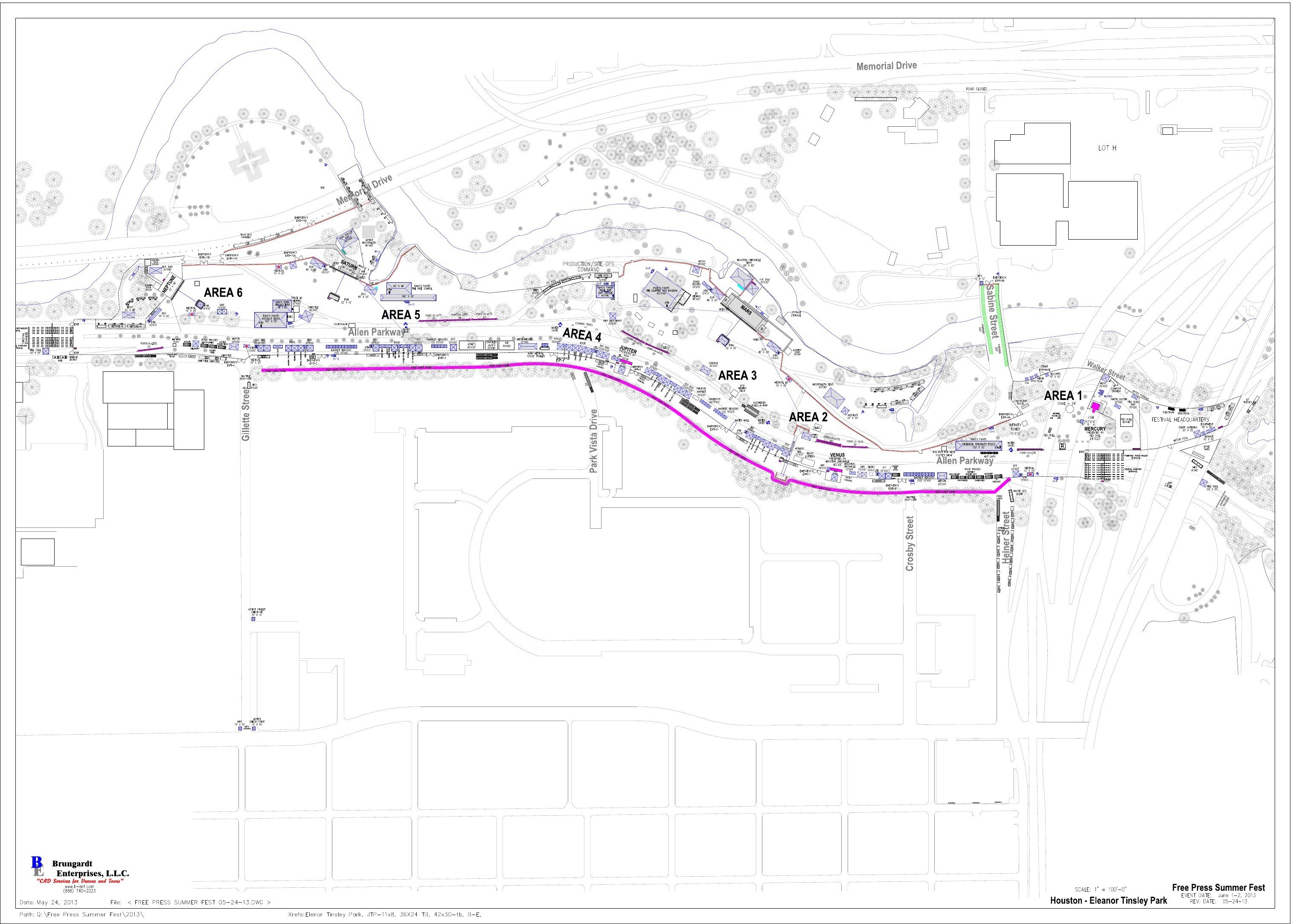
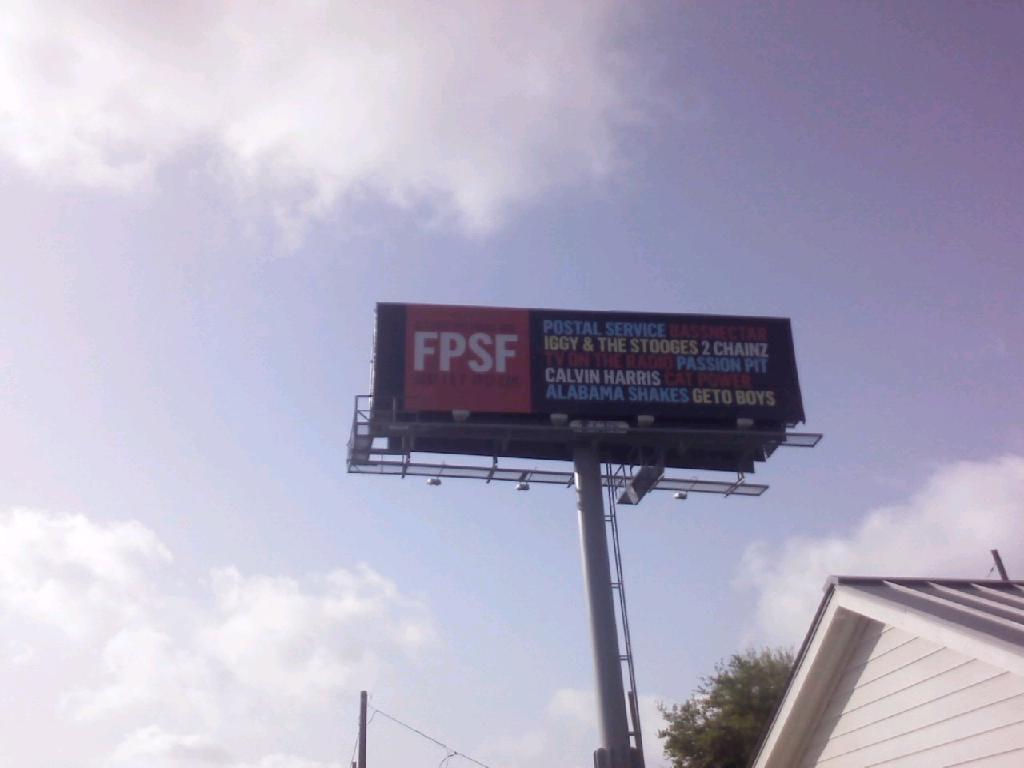
The collection record states that flooding forced the 2015 and 2016 editions to relocate to NRG Park and that the festival returned to Eleanor Tinsley Park in 2017, its final year under the Free Press Summer Fest name; the dated edition rows agree. The production record is densest in the middle of the run. For 2013 the archive holds site maps, billboard proofs, stage guides and posters that document an event operating at citywide scale in its fifth year, and the Houston Chronicle in 2013 described a festival that still had its outsider spirit. In the paper's own pages the festival had become a section: the recovered CMS carries 45 records under a section labelled FPSF, and the archive's collection gathers 95 articles about it.
By 2014 the organisation was being described from outside as a single enterprise. The Houston Business Journal profiled the paper and its festivals together that August (Entrepreneur aims to get Houston in the arts and music culture spotlight), and its 40 Under 40 class for the year identified Omar Afra as founder of both Free Press Houston and Free Press Summer Fest. The City of Houston's Arts and Cultural Plan materials for 2014–2015 list him on the plan's community advisory committee as owner of Free Press Houston and producer of the Free Press Summer Festival — the municipal record describing a newspaper publisher in his capacity as a festival producer. The held 2014 issues and staff boxes, with their Business Manager and Free Press TV lines, are the internal counterpart of that description. The timeline marks 2014 as the year the paper, Summer Fest and its production arm are documented running as one operation.
5. Civic programming: HOU Decide, 2015
The paper's civic side had always been in its pages: the Editorial, Local and State, News and Politics sections between them account for 508 recovered records, and the publisher's own bylines include arguments for decriminalisation ahead of a district-attorney race, an open letter to Montrose, and reporting from the aftermath of Hurricane Harvey. In the autumn of 2015 that side took an institutional form. The archive's HOU Decide record describes a Houston mayoral-debate collaboration among KHOU 11, Houston Public Media and Free Press Houston. The archive holds 2 edition records: HOU Decide: The Final Debate (October 17, 2015) and HOU Decide: King vs. Turner (December 5, 2015). The first, held before early voting, brought seven mayoral candidates together in a format that took questions from social media and was designed in part to reach younger voters; KHOU 11's Greg Hurst moderated, and Doug Miller, Omar Afra and Laurie Johnson sat on the question panel. The second brought the runoff candidates, Bill King and Sylvester Turner, together for a final televised debate before the December 12 election.
6. Day for Night, 2015–2017
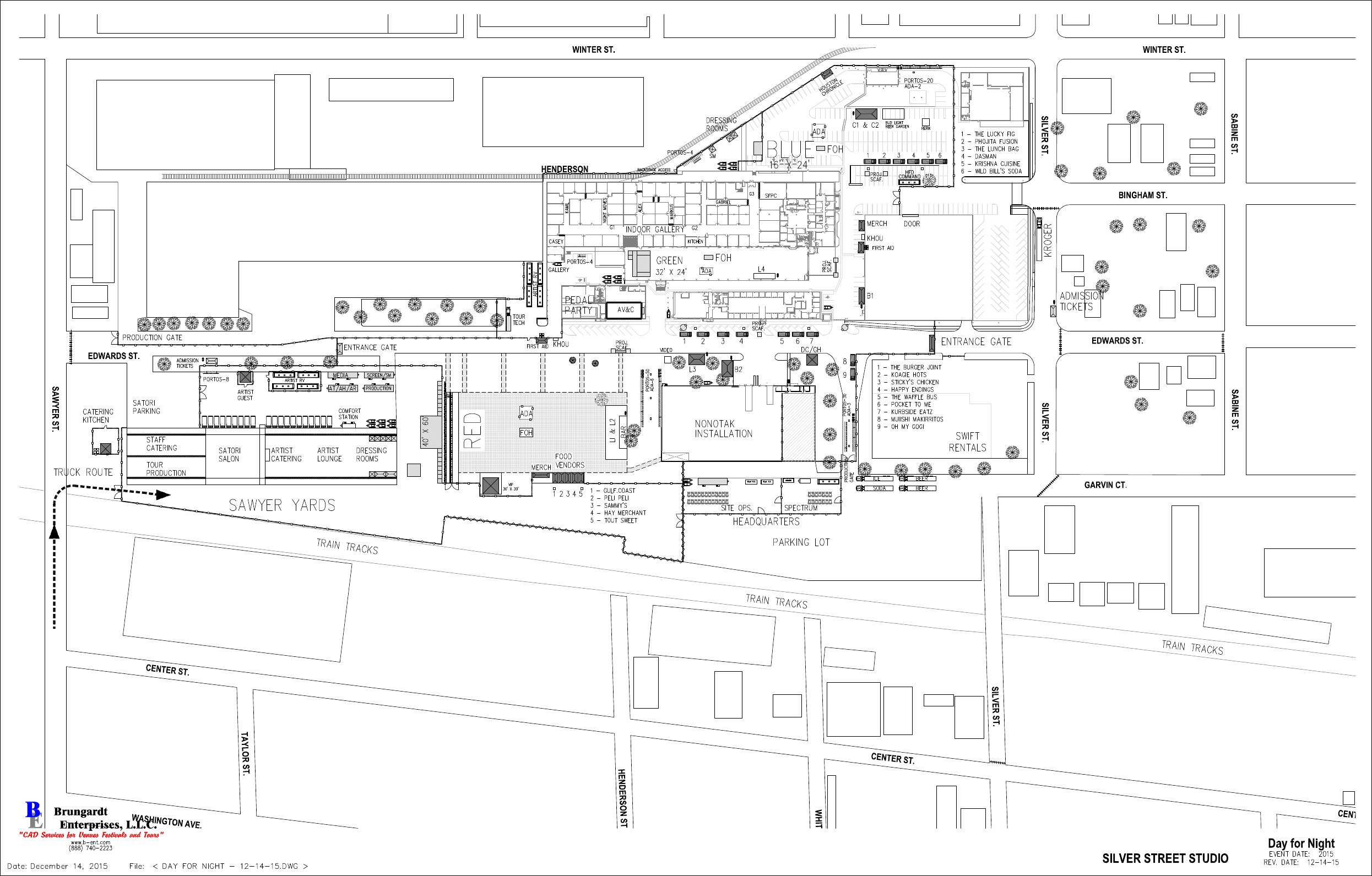
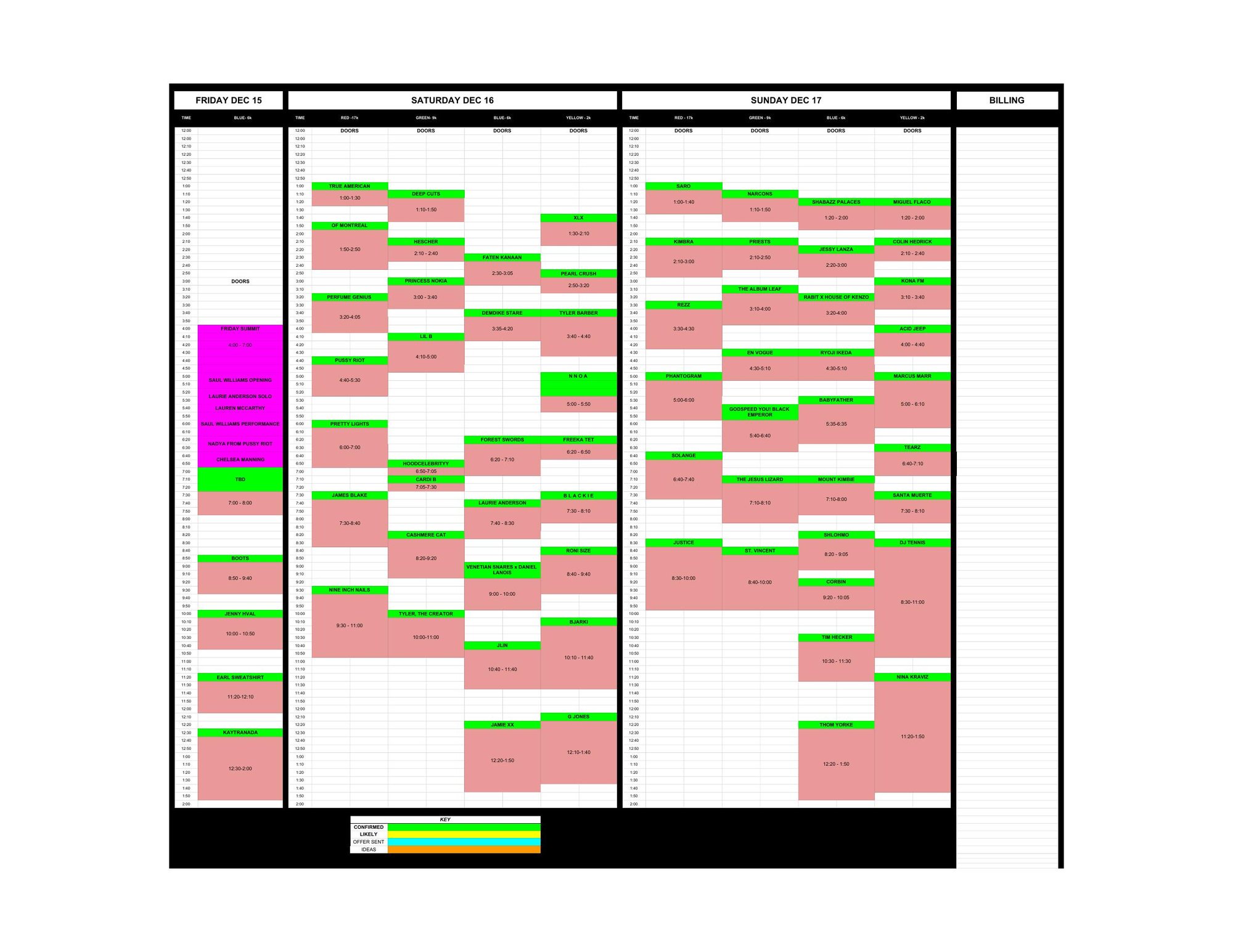
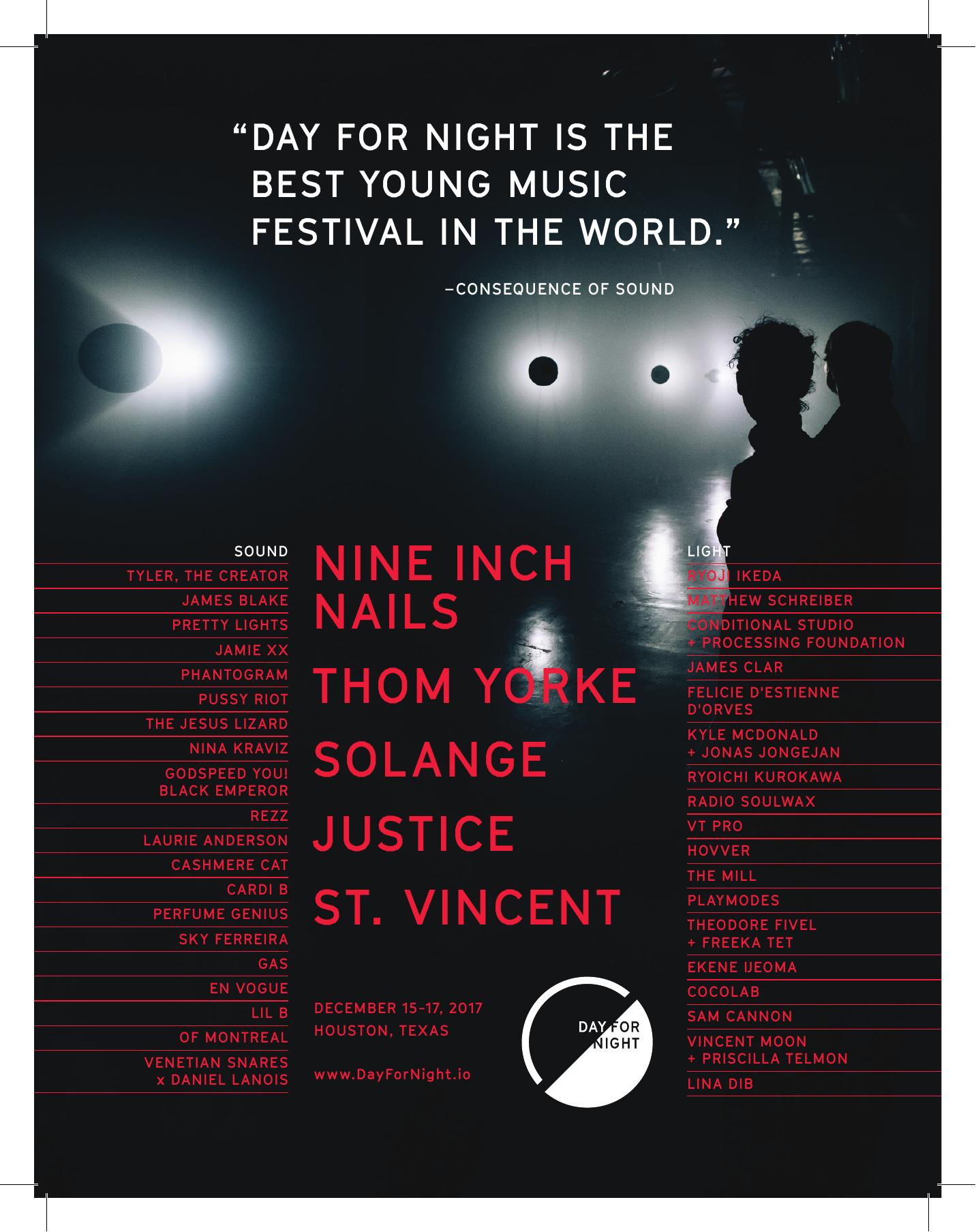
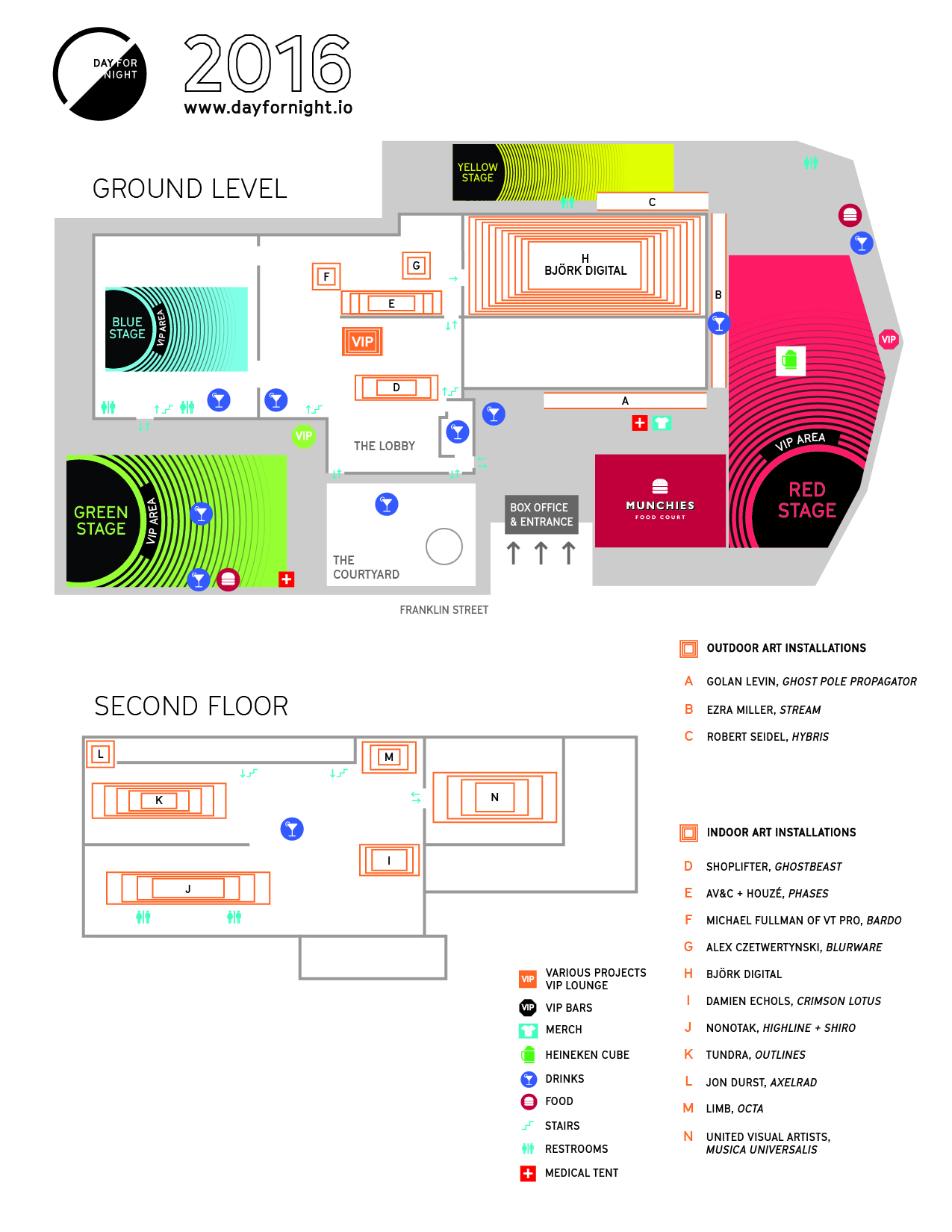
The archive's Day for Night record dates the festival's conception to 2014, to Omar Afra and Kiffer Keegan, childhood friends who began developing the idea while working on the visual language of Summer Fest. The premise recorded there is that visual art, light, architecture and emerging technology should be as central to a music festival as its performers. Alex Czetwertynski was brought in to curate the art programme; Marini Van Smirren served as general manager; musical programming was curated by Omar Afra and Chris Wise; Mark Armes directed video and visual documentation. The archive holds those collaborator roles on their own records rather than collapsing them onto the publisher's. Three editions are established: Day for Night 2015 (December 19, 2015 — December 20, 2015, Silver Street Studio, Sawyer Yards); Day for Night 2016 (Former Barbara Jordan Post Office - Now 'Post HTX'); and Day for Night 2017 (December 15, 2017 — December 17, 2017, Former Barbara Jordan Post Office - Now 'Post HTX'). The second edition was staged at the former Barbara Jordan Post Office at 401 Franklin Street, the site recorded across the festival's held production and licensing documents and reported locally when the lineup was announced (ABC13 Houston).
The third edition, in December 2017, drew national coverage. The Houston Chronicle published a profile of the festival's founding and its downtown site (Day for Night festival springs from the unconventional mind of Omar Afra, 2017-12-08), and Consequence of Sound named Day for Night its Festival of the Year for 2017. The archive's collection gathers 32 articles, an index of the art programme by year, and the production and licensing documents from which the edition records are drawn. The publisher's finding aid lists what the record establishes about his own part in it.
7. The close, 2018
The recovered publishing record ends in 2018. The corpus holds 18 dated article records for that year against 402 for 2017 and 580 for 2016; the 2018 index lists them. The archive's digitised issue run ends earlier, with the 2015.10 issue, and the archive therefore does not state from its own holdings when the printed edition stopped; it records the paper's run as 2003–2018 on the strength of its publishing record as a whole. Summer Fest's 2017 edition was its last under that name, and Day for Night's 2017 edition its third and final. The former website remains reachable but is not operated by this archive, and the archive's corrections and date reconciliation apply to what was recovered from it.
8. Why the record matters now
Set out in order, the held record describes a fifteen-year sequence: a monthly paper (2003); a free street festival run by its staff (from 2005); a co-produced music festival in a city park that grew into a citywide production (2009–2017); a televised civic debate series co-produced with a broadcaster and a public-media organisation (2015); and an art-and-music festival in a former federal building that a national title named festival of the year (2015–2017); then the close of the paper (2018). The names carry across the sequence. The people printed in the staff boxes appear on the festival production files and in the collaborator roles the collection records preserve, and the paper's pages carried the coverage, the listings and the artwork for the events its organisation was producing.
Primary records cited
The records below are the strongest held evidence behind each part of this essay, drawn from the archive's own collection contents in the order a researcher would open them. Each is a recovered article record with its provenance stated.