Fitzgerald’s became the year-round physical commons of the Free Press Houston, Pegstar and Free Press Summer Fest ecosystem after the operating handoff in September 2010. This collection follows the work inside that convergence — booking, production, design, bar operations, local and touring bills, festival afterparties, neighborhood pressure and the maintenance of an old building — while placing it inside the venue’s much longer Houston history. The principal operating era ends with Pegstar’s final booked show in August 2015; 2016 is presented here as an epilogue tracing the transition into White Oak Music Hall.
Fitzgerald’s on White Oak Drive · Held with the 2015 Free Press Houston retrospective
1918—2010
Before Us: From Polish Hall to Houston Institution
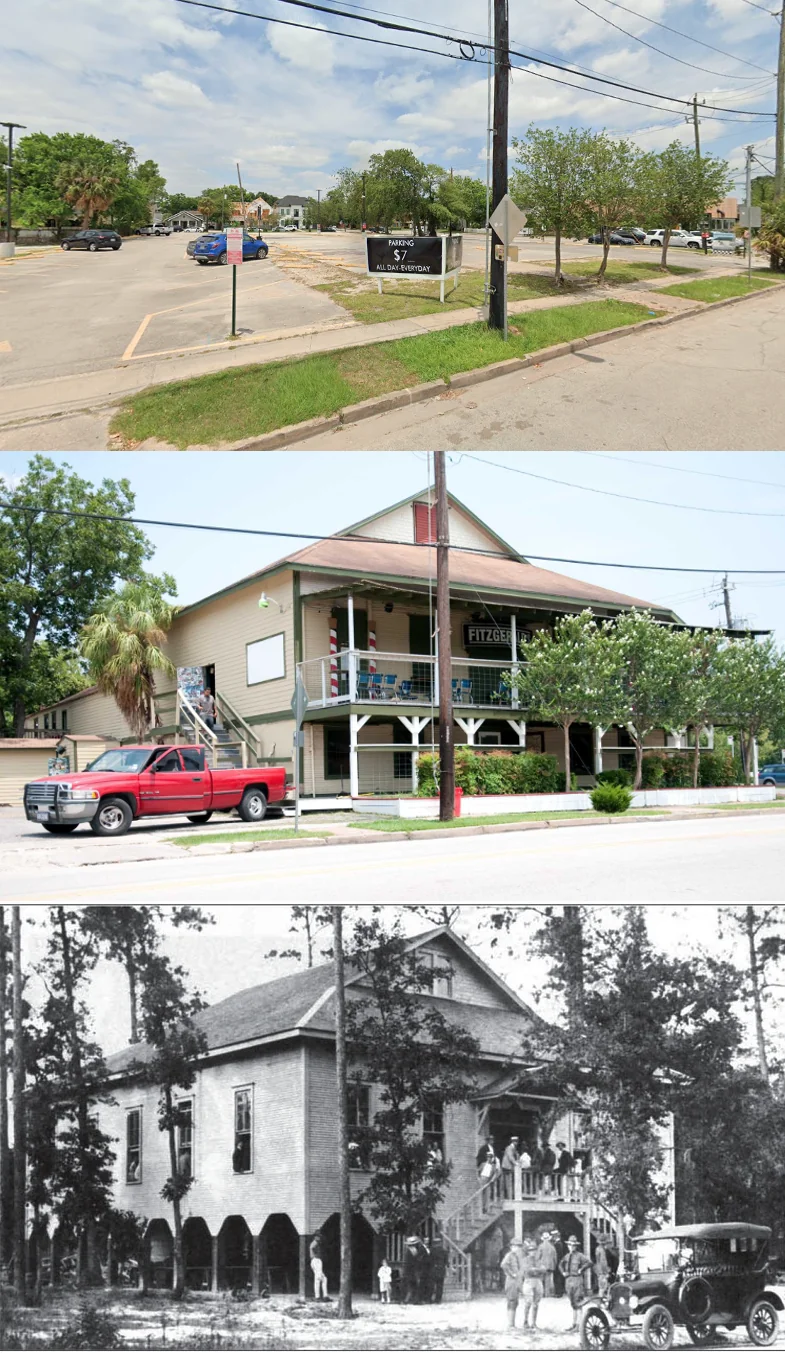
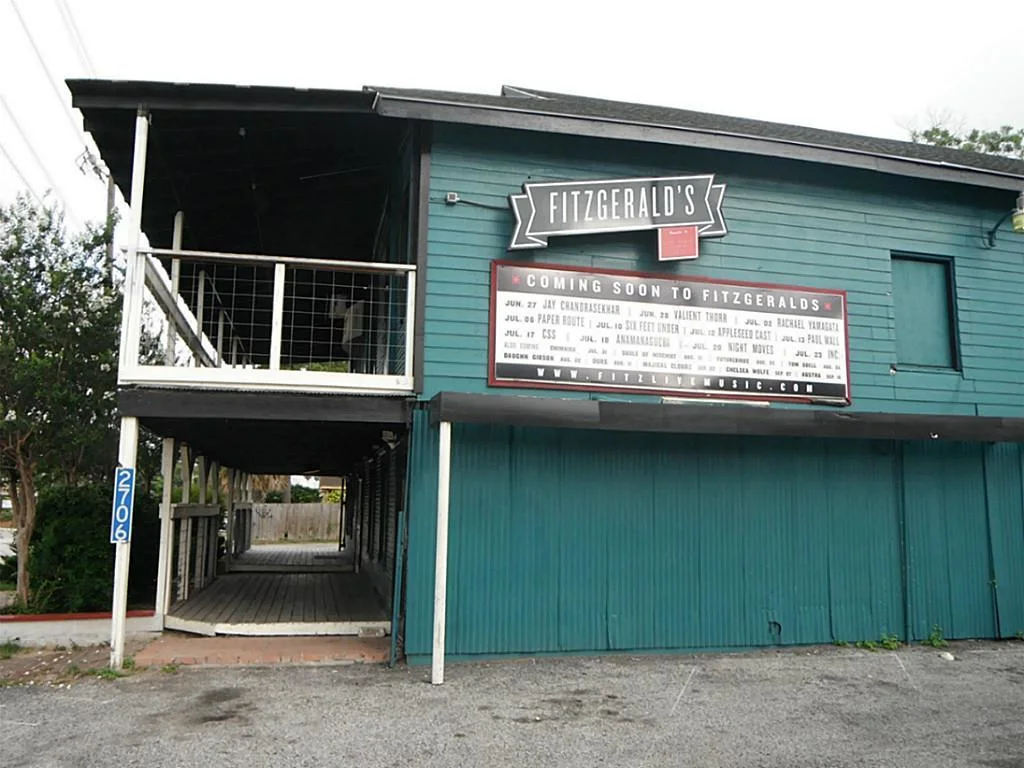
The building at 2706 White Oak Drive began in 1918 as a Polish community and dance hall: a social building before it was a commercial music room. That first use matters. Long before amplified bands filled its two floors, the house was already a place made for gathering — timber, stairs, a broad upstairs room and neighborhood proximity combining into a structure whose strengths and limitations would shape everything that followed. Its later history cannot be separated from that physical inheritance. Fitzgerald’s was never a purpose-built modern concert hall; it was an old communal building repeatedly adapted by the people who needed it.
Sara Fitzgerald transformed the building into Fitzgerald’s in 1977. Over the next thirty-three years she made it one of Houston’s defining independent live-music institutions, a room where local scenes and national touring circuits met without the scale or distance of an arena. The club’s history is associated with performers including Stevie Ray Vaughan, James Brown, ZZ Top, Tina Turner, Etta James, Townes Van Zandt, Bonnie Raitt, Albert King, Los Lobos, R.E.M., the Ramones, Sonic Youth, Soundgarden and Butthole Surfers. That list spans blues, punk, roots music, college rock, metal and the difficult-to-classify music that independent rooms have traditionally made space for.
The venue’s importance was not simply the accumulation of famous names. It came from continuity: generations of Houston musicians, promoters, bartenders, door staff, technicians and audiences learning the same rooms. Upstairs and downstairs could hold different shows on the same night. A touring act could share a calendar with a local bill, a benefit, a free night or a scene-specific gathering. The building functioned as both destination and workshop — a place where a city’s music culture was performed in public and where the practical knowledge required to sustain it was passed from crew to crew.
That continuity also carried friction. A loud, aging venue embedded in a residential neighborhood had long negotiated complaints, building wear, changing expectations and the economics of maintaining an old structure. None of those pressures began in 2010. They belonged to the history inherited with the building, just as surely as its stage, balcony and reputation did. Later conflict must therefore be read within a longer collision between live music, neighborhood life and the redevelopment of the Heights, not as a problem created by one operating group.
Fitzgerald’s also occupied an unusual scale in Houston’s venue ecology. It was large enough to receive consequential touring bills but intimate enough for the people working a show to remain visible to the audience and to one another. The two rooms allowed different communities to overlap rather than wait for separate institutions to serve them. A person could enter for a national headliner and encounter a local opener, or arrive for a downstairs bill while another audience assembled overhead. That porousness helped the venue operate as shared infrastructure rather than as a single-genre clubhouse.
Its independence was practical, not abstract. The room depended on accumulated knowledge: how to load a band into an old building, how to move people through narrow stairs, how to staff two bars, how to protect a floor under repeated use, how to manage sound at the edge of a residential block, and how to keep a nightly calendar alive between larger events. Sara Fitzgerald’s long tenure had established the club as an institution precisely because that labor continued long enough for several generations of Houston music to recognize the building as common ground.
When the Free Press Houston, Pegstar and Free Press Summer Fest network entered the building in 2010, it was not inventing Fitzgerald’s. It was accepting stewardship of a ninety-two-year-old building and a thirty-three-year-old club, together with the expectations and memories attached to both. The years documented in this collection form one consequential chapter in a much longer institutional life: a period when the venue became the year-round physical commons of an overlapping newspaper, promoter, festival, staff and audience ecosystem.
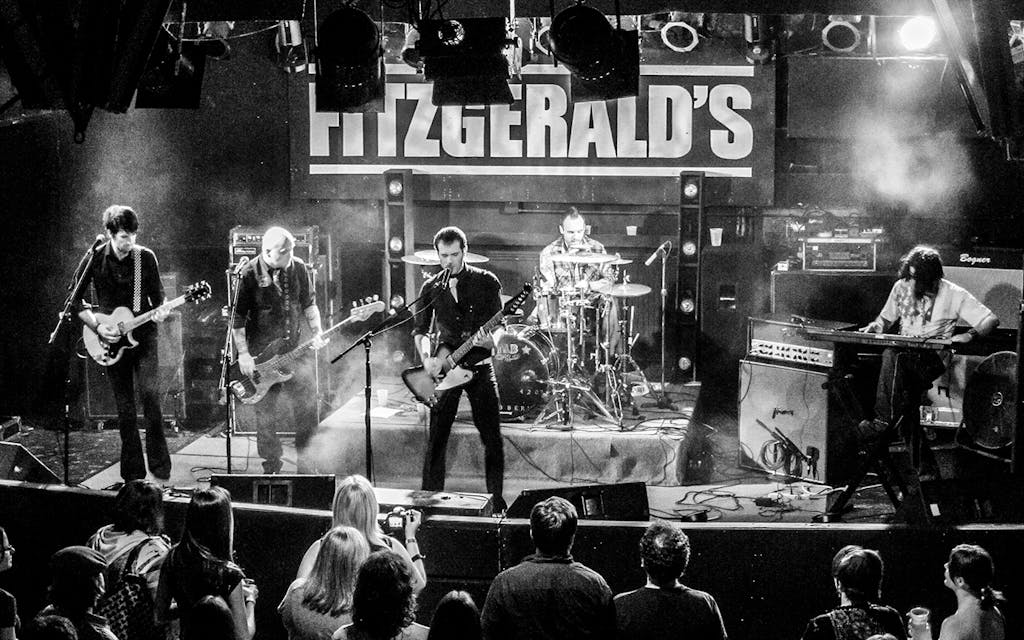
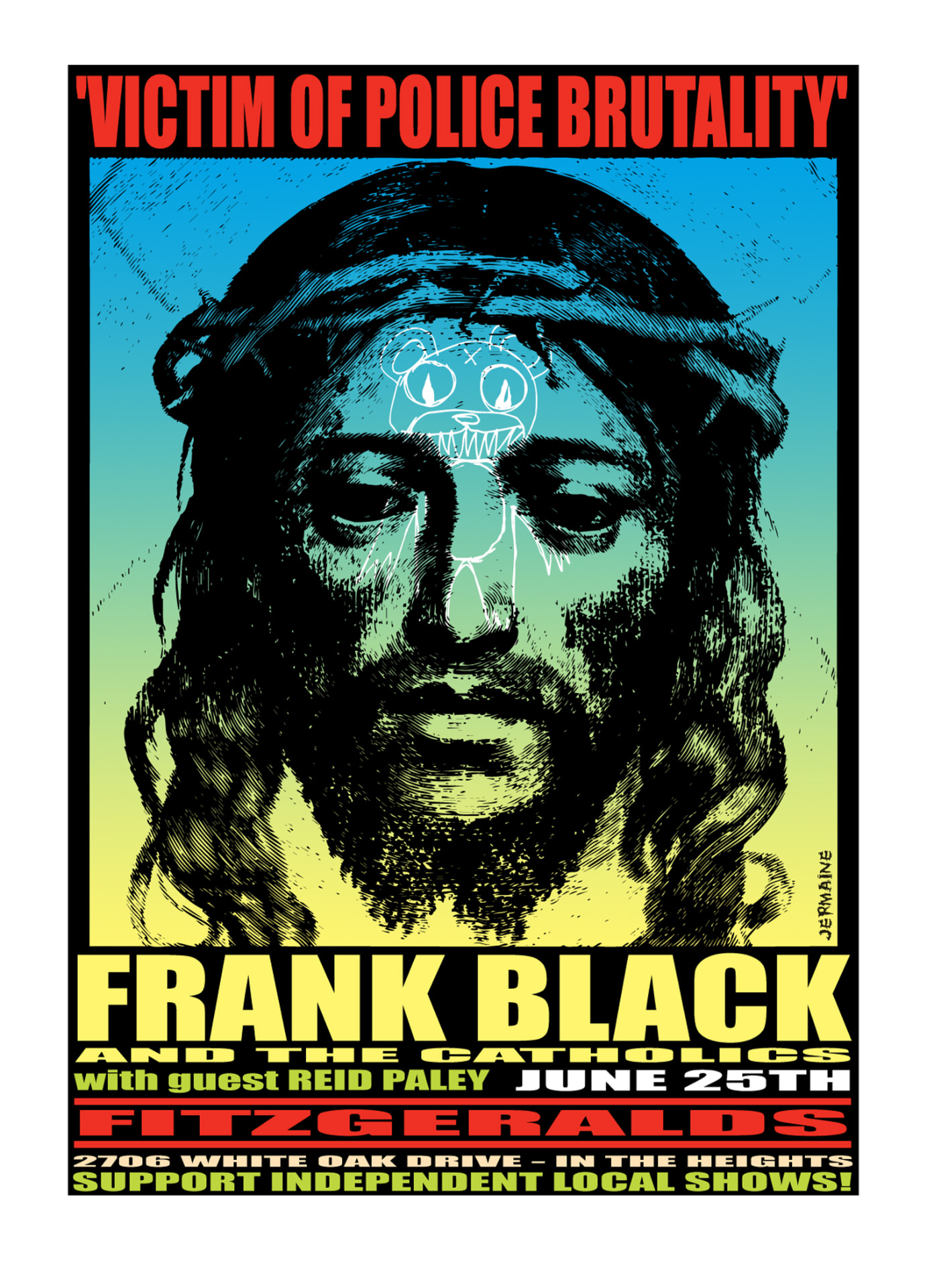
Blondes Make Better Victims performing at Fitzgerald’s in Houston on August 14, 2010.Frank Black and the Catholics with guest Reid Paley · Fitzgerald’s, 2706 White Oak Drive · Poster by Jermaine Rogers
September 2010
A Houston Institution Changes Hands
The new operators were not starting a music venue; they were inheriting one. Fitzgerald’s entered the FPH/Pegstar orbit carrying roughly 92 years of building history and 33 years of club history. What happened after September 2010 was not its birth, but one of its most consequential reinventions.
2010—2015 · Operators
The Operating Partnership
The Fitzgerald’s of these years was run by a partnership rather than a single proprietor. Omar Afra, publisher of Free Press Houston, was a co-operator through the period; the held 2015 retrospective records that his relationship with Sara Fitzgerald secured the meeting that led to the handoff. Jagi Katial, founder of Pegstar, was the other co-operator and the principal booking and promoter figure across the calendar. Johnny So, a Pegstar partner, carried operating leadership at the venue and was later part of the White Oak Music Hall transition.
That arrangement is why the building read as shared infrastructure: a newspaper, a promoter and, each summer, Free Press Summer Fest drew on the same people, calendar and rooms. Sara Fitzgerald’s thirty-three years preceded all of it, and the staff records below remain the fuller account of who ran the place night to night.
Archival evidence · August 2010
Opening the building
The startup record is administrative and physical at once: incorporation, permits, insurance, utilities, payroll, ticketing and staffing sit beside repairs to the bars, floors, stage, stairs, balcony, patio, exterior, sound and lights. It shows the venue as an institution assembled through paperwork, labor and material before a band reached the stage. It is rumored that Timothy Dorsey removed no less than 10,000 staples from the interior support beams. These staples were used to display posters for the preceding 3.5 decades.
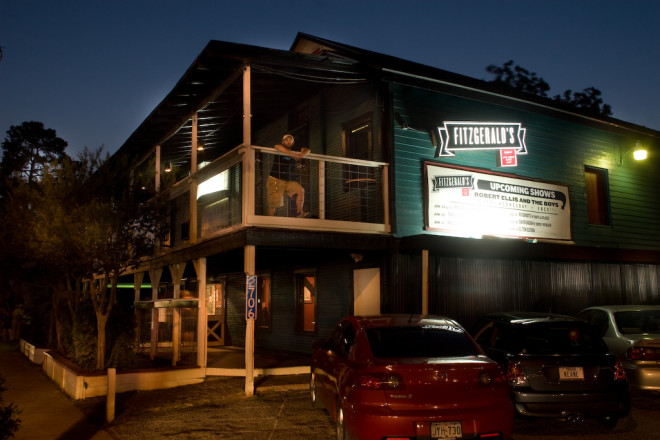
Fitzgerald’s exterior and show marquee · 2706 White Oak Drive
Chronological spine
The operating years
2010
A Houston institution changes hands
The new operators were not starting a music venue; they were inheriting one. Fitzgerald’s entered the Free Press Houston and Pegstar orbit carrying roughly ninety-two years of building history and thirty-three years of club history. What followed the September 2010 operating takeover was not the birth of Fitzgerald’s, but one of its most consequential reinventions.
An August 11 meeting agenda shows the work before reopening in institutional detail: corporate formation, the Fitzgerald’s DBA, certificate of occupancy, tax identification, liquor licensing, the City of Houston alcohol permit, notices to adjacent homes, insurance, utilities, payroll, ticketing, personnel, production and a grand reopening. The same agenda moved room by room through repairs to the main hall, bars, floors, stage, stairs, balcony, band area, downstairs, exterior, signs, patio, sound and lights. The record is less glamorous than a concert poster and more revealing: opening the venue meant rebuilding the operating system around an old building.
2011
A two-room calendar at full speed
The surviving event export records 418 active events across 284 separate dates in 2011. It documents a calendar in which touring bills, Houston artists, free nights, benefits, Free Press Houston anniversaries and Free Press Summer Fest programming occupied the same institution. The Walkmen with the Head and the Heart, Yelle, Big Freedia, Daniel Johnston, Bun B, Omar Rodríguez-López Group, Das Racist, Murs, Foals, Black Lips and Thee Oh Sees appear alongside recurring local programming and Robert Ellis & The Boys.
This density made Fitzgerald’s a year-round counterpart to the annual festival. The paper could cover the city, Pegstar could route artists through it, FPSF could gather its community there outside festival weekend, and venue staff could turn that activity into a nightly practice. The overlap was cultural as well as organizational: local and touring artists did not occupy separate worlds when they shared the same calendar, rooms, staff and audience.
2012
The system becomes measurable
The same internal export records 492 active events across 308 dates in 2012. Across 2011 and 2012, its surviving ticket fields total at least 110,393 paid admissions. These figures are not total attendance: they describe only what survives in that ticketing system, excluding whatever was not recorded there. Even with that limit, they make the scale legible — two rooms, hundreds of active records and a schedule that approached daily use.
2013—2014
A broad Houston room
By 2014 the surviving newsletters show the programming range in concentrated form: Swans with Xiu Xiu, Mobb Deep, Deafheaven with Pallbearer, Black Lips with King Khan, the Tontons with Ume, Yelle, Run the Jewels with Ratking and Despot, Caribou with Jessy Lanza, Old 97’s and the Sword, alongside local and benefit shows. The significance lies less in any one marquee than in the coexistence of these audiences within one heavily used independent building.
Fitzgerald’s was also visibly part of the FPH/Pegstar/FPSF circuit. Official festival afterparties returned performers and audiences to White Oak Drive; a 2015 newsletter invited readers to the FPSF Diplo afterparty and explicitly described partying with the festival staff. The annual outdoor event and the nightly venue were distinct institutions, but the labor, relationships and culture moving between them were not.
2015
Leaving the building
In the Free Press Houston retrospective “Past, Present & Future: Pegstar Opens Up,” Jagi Katial recalled that discussions with Omar Afra about a larger room led them to Fitzgerald’s; Afra’s relationship with Sara Fitzgerald secured the meeting, and the deal came quickly. By the end, Katial said, Pegstar was producing roughly 550 shows a year there. He also described the costs of keeping the building operational: repeated floor reinforcement, plumbing failures, air-conditioning replacement, sound pressure and neighborhood conflict.
The final Pegstar-booked show took place August 29, 2015. The operating and booking era therefore ends in August–September 2015, even though this collection carries 2016 in its title. The distinction is intentional: the next year belongs to the transition, not to an invented extra season at Fitzgerald’s.
2016
Pegstar and FPH formally end lease at Fitz and Pegstar moves to White Oak Music Hall.
White Oak Music Hall opened the next phase of the overlapping Pegstar and Free Press Houston ecosystem in 2016. Its purpose-built rooms answered pressures that the Fitzgerald’s building could not: scale, infrastructure, sound control, neighborhood management and the long-term cost of adapting a century-old hall. The move did not erase the Fitzgerald’s chapter. It carried forward the staff relationships, booking practice and audience trust developed there while marking a decisive break in physical form.
2019
The building is demolished
In May 2019, after Sara Fitzgerald sold the property, the Fitzgerald’s building at 2706 White Oak Drive was demolished. The site was to become a parking lot.
Surviving ticketing-system data · not total attendance
By the Numbers
418
2011 active event records
492
2012 active event records
284
2011 active-event dates
308
2012 active-event dates
110,393+
Paid tickets in surviving system
Working archival register · 2010—2015
Fitzgerald’s Show Registry — 2010–2015
1,400+ recovered shows from the Pegstar / Free Press Houston operating period. 1,412 rows are held here.
Open the registerClose the register
This is a working archival register assembled from the supplied former master show list, held Fitzgerald’s and Pegstar material and limited public corroboration. It is not a claim of audited completeness. Across these years the same building carried Tame Impala, St. Vincent, Foals, Run the Jewels, Father John Misty and Death Grips alongside hundreds of Houston bills.
1,412 shown
The Drums / Young Friends / Black Congress / Weird PartyFitzgerald’s · Houston, Texas
Electric Six / The Soft Pack / The Futureheads / Born Ruffians / Meligrove Band / dUNETXFitzgerald’s · Houston, Texas
The Vibrators / Chelsea Hotel / Star Fucking Hipsters / Talk Sick Brats / UK Subs / Total Chaos / Molotov CompromiseFitzgerald’s · Houston, Texas
These United States / Thrift Store CowboysFitzgerald’s · Houston, Texas
Futurebirds, Promised Land SoundFitzgerald’s · Houston, Texas
Into It. Over It., The World is a Beautiful Place And I am No Longer Afraid to Die, A Great Big Pile Of Leaves, Football EtcFitzgerald’s · Houston, Texas
Russian Circles, Ken Mode, Inter ArmaFitzgerald’s · Houston, Texas
An Evening With That1GuyFitzgerald’s · Houston, Texas
Sebadoh, OctagrapeFitzgerald’s · Houston, Texas
The Sword, Big Business, O Brother, From BeyondFitzgerald’s · Houston, Texas
Buxton plays Talking Heads / Wild Moccasins / Sideshow Tramps / Young Mammals / Ishi / Telephantom / Night Drive / Bang Bangz / Dune TX / Hevin Spacy / Children of Pop DJ SetFitzgerald’s · Houston, Texas
December 2010
Noise, Neighbors & a Changing White Oak
A response to an anonymous neighborhood complaint records the new ownership group taking over operations in September 2010 and responding with specific mitigation: lowering PA volume, sharing personal cell numbers with neighbors, adding sheetrock, acoustic material and blow-in insulation, investigating further treatment, taking nightly decibel readings at adjacent properties, meeting with an HPD sergeant and employing off-duty HPD officers.
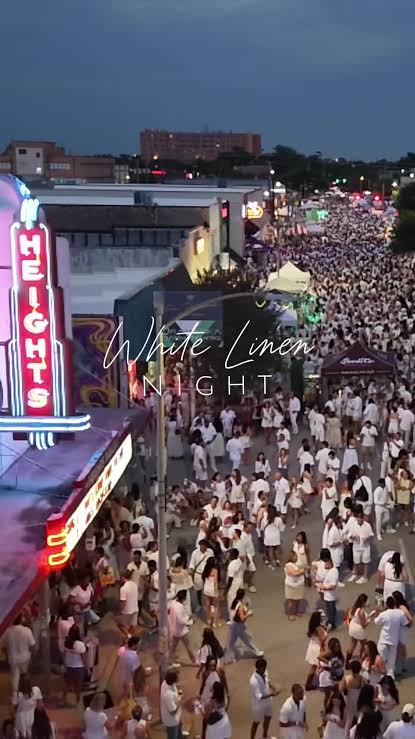
The letter describes White Oak as undergoing “explosive growth,” naming Christian’s Tailgate, Tacos A Go Go, D’Amico’s, Corkscrew, Onion Creek and Dry Creek among new or arriving businesses. Its language captures a historic music venue meeting a rapidly changing Heights: sound, residence, commerce and city enforcement compressed onto the same street. Neighborhood conflict predated the 2010 group. The archive presents this as a long-running civic negotiation intensified by growth, not a grievance with a single side.
White Linen Night in the Heights · Supplied by the curator
Named roles follow the held retrospective, startup records and curator-established staff records. A name links only where the archive already holds a canonical contributor page.
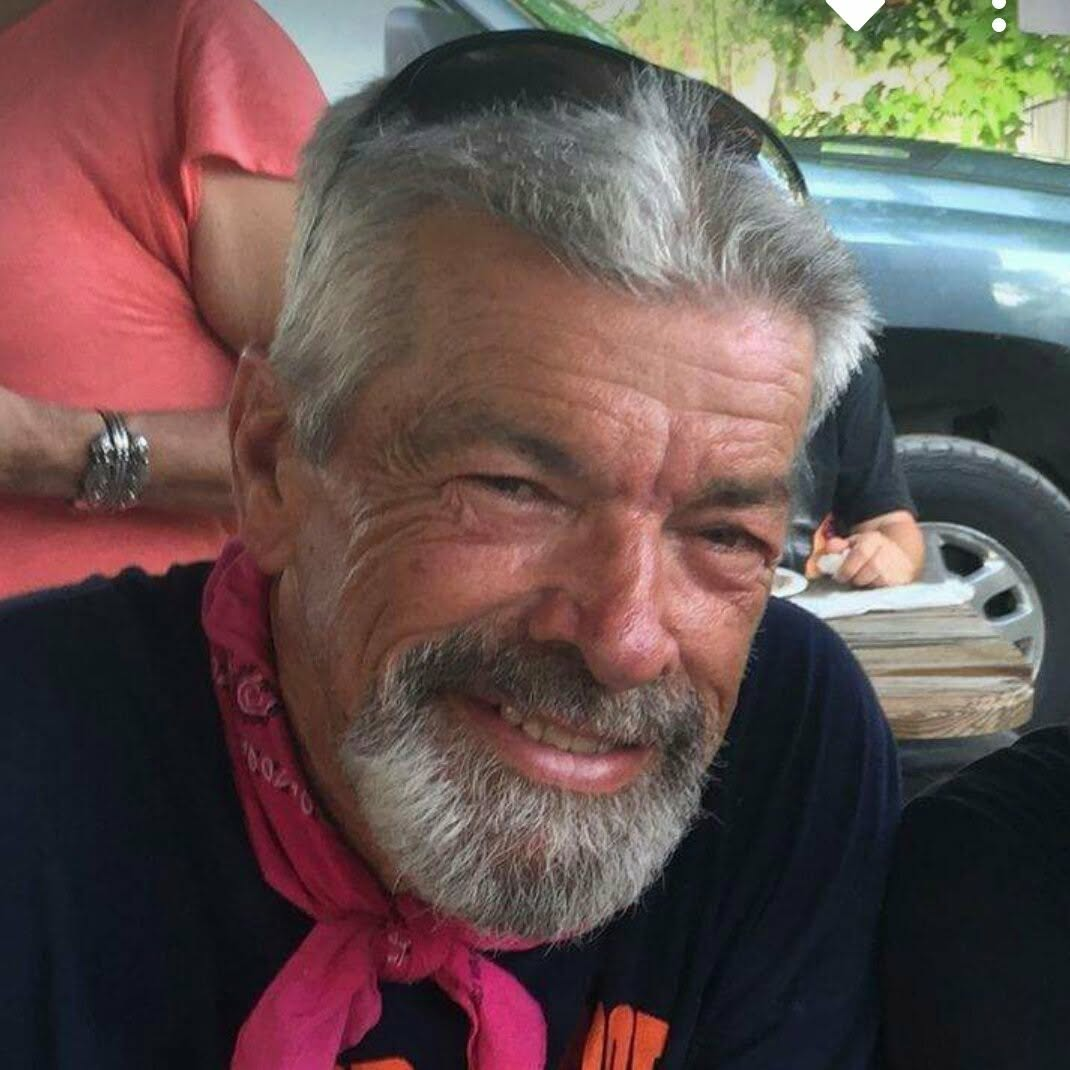
Tobin W. Harvell was one of Fitzgerald’s load-bearing human beings—the kind of staff member whose importance could never be captured by a job title. Sara Fitzgerald used to say that Tobin “came with the building,” and in many ways he did. When the Pegstar and Free Press Houston team took over Fitzgerald’s in 2010, Tobin arrived as part of its institutional memory. He knew every nook, stairwell, door, breaker, hiding place and oddity of the nearly century-old building. He ran security, managed the facility during the day and carried an intimate working knowledge of Fitzgerald’s that could only have been accumulated through years of paying attention. He could be strict, imposing and entirely serious when the job demanded it, but anyone who knew him also knew the other Tobin: the man whose smile could light up the room.
Outside Fitzgerald’s, Tobin was an artist, an enthusiastic amateur photographer and a deeply generous volunteer. He gave his time on numerous occasions to the Ronald McDonald House in Galveston, painting faces and creating artwork for young patients, and worked with the Art of Hope Foundation making masks with children at Shriners Hospital in Houston. He was also a voracious photographer of the city around him—people, buildings, street scenes and strange little objects that caught his attention in and around downtown Houston—documenting them continuously and sharing them on Facebook. There was an artist’s curiosity behind the stern Fitzgerald’s exterior: he noticed things, preserved them and found reasons to make something for other people.
Tobin died suddenly in 2018 while doing one of the things he loved most: riding his bicycle. For those who worked at Fitzgerald’s, his absence was larger than the loss of a security chief or facility manager. He was part of the building itself—a keeper of its accumulated knowledge, a steady presence across changing eras and one of the people who made an old Houston institution function every day. Fitzgerald’s had plenty of famous names pass across its stages. Tobin Harvell belonged to the quieter history beneath them: the people who kept the doors open, knew where everything was, protected the room and made the place feel like a neighborhood living room.
Tobin W. Harvell (1951—2018) · Supplied by the curator
Archive Facts
Building
Constructed in 1918 as a Polish community and dance hall
Fitzgerald’s
Founded by Sara Fitzgerald in 1977
Address
2706 White Oak Drive, Houston, Texas
FPH / Pegstar operations
September 2010—August / September 2015
Epilogue
2016 transition to White Oak Music Hall · building demolished May 2019
Archival sources and endnotes
11 Aug 2010Fitzgerald’s meeting agendaFormation, permits, operations, personnel, production, reopening and a room-by-room renovation list. FPH private archive.
Dec 2010Response to neighborhood noise complaintRecords operating handoff, mitigation, direct neighbor contact, acoustic work, nightly readings and coordination with HPD. FPH private archive.
2012Fitz metrics event export991 event records from December 2010 into early 2013; the basis for the counts and example shows published here. FPH private archive.