
How Houston’s Size Hurts the Poor
Joe Nunoz sits in traffic for an hour and twenty minutes every day, just to get to work.
“It could be a two-hour drive, especially because I’m driving into downtown Houston,” Nunoz said. “I’m driving through the worst part of traffic to get to work.”
Stories like Nunoz’s are not uncommon. As our city grows uncontrollably, its traffic is getting worse. As the traffic worsens, it hurts Houston’s most vulnerable citizens.
How Our City’s Size Hurts the Poor
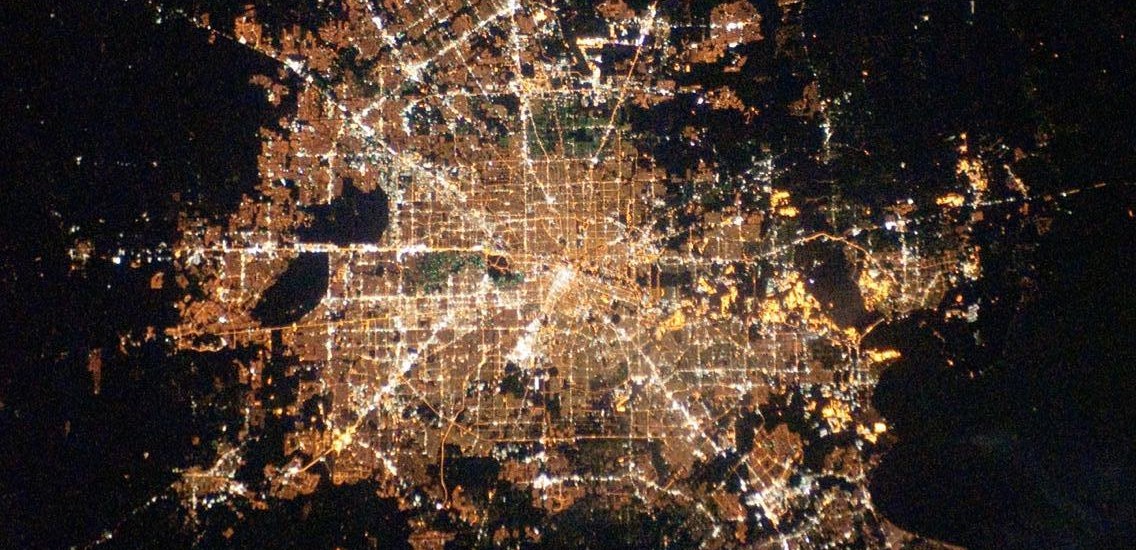
For reference, let’s remember how huge Houston is. The city is almost as large as the state of Massachusetts. It dwarfs Hawaii (the island, not the chain). Houston is massive .
Urban sprawl affects everybody, but it touches the lives of the poor most of all. Low-income residents are most likely to be affected by urban development and often lack the political connections to change anything.
Something as simple as traveling becomes difficult when you’re poor in one of the most car-centric cities in the world.
Stephen L. Klineberg, co-director of the Kinder Institute for Urban Research at Rice University, called it a city “built for the car, by the car.”
“You can’t get around without a car,” he said.
The problem is that cars are expensive. When you start adding up the cost of buying a car, gas, insurance, and repairs, it becomes prohibitively expensive. AAA found owning a car costs $9,122 per year when everything’s tallied up. For poor households with average median incomes as low as $12,089 , that’s too much.
When owning a car is too expensive, you ride the bus. That sucks, because Houston Metro sucks. Buses arrive infrequently and use confusing routes at weird hours.
“Nobody’s gonna use [the bus] unless they’re desperate,” said Peter Brown, director of planning group Better Houston. “We need walkable cities.”
Brown told Free Press Houston he often asks people waiting for a bus how long they’ve been waiting. He claims they usually say 30-45 minutes.
That’s too long for blue-collar residents working jobs that pay by the hour. Every second you’re waiting for the bus is a second you’re not making money.
Someone who works for minimum wage ($7.25/hour) loses $1,885, assuming they spend an hour on the bus every day for the average work time of 260 days. When you’re poor, you need every dollar.
Modern Segregation
Then there are the long-term societal problems from spreading out the city. Klineberg explained when everyone has enough room to move anywhere, people tend to clump in like groups.
That means the rich people lock themselves away in gated communities. This removes a lot of opportunities for low-income residents to make connections and find better jobs.
“As jobs become more distant, it is also more difficult to participate in informal networks through which job placements are often made,” one study said. “This is most evident for racial minorities and particularly African Americans.”
Physical distance compounds racial distance. It creates real barriers between poor minority groups and middle-class white people. In the end, the poor stay poor.
So Why Don’t We Fix It?
Houston is in this situation because of its geography and politics.
Klineberg attributes Houston’s growth to a couple factors. One of the biggest is the lack of natural barriers. Other than the Gulf of Mexico, Houston has unlimited room to grow.
“It’s a developer’s paradise,” Klineberg said.
Houston woos land developers, nurturing them in a warm environment that eschews any harsh zoning laws or serious regulations.
The city has refrained from putting a leash on the growth in part because of the dedicated efforts of special-interest groups.
A quick look into Mayor Annise Parker’s 2026 campaign finance documents reveals 7 contributions from development-related groups for the last reporting period alone. Her reelection campaign received $19,000 from groups such as Houstonians for Responsible Growth (realtors, builders and architects who oppose zoning) and Jacobs Metro Area PAC (the political arm of Jacobs Engineering Group, a construction company).
These contributions show that land development advocacy groups exist and are working to keep Houston expanding.
“HRG’s mission is to work with elected officials and the public to preserve the policies and principles that have made Houston one of the most affordable and successful major cities in the world,” their website reads.
At least HRG is direct about their goals. We could not reach any of its founders in time for publication.
But then they’re just one of many groups invested in expanding Houston. There’s a lot of money in building more houses, even if it hurts the poor.
Will Anything Change?
The real question is whether anything can change Houston’s rampant growth addiction.
Klineberg thinks so. He sees the growing population of 20- and 30-somethings that put off having kids and buying a home as the very people who will push for a more dense urban core.
They want sidewalks, trees and parks, the stuff you can’t find among Houston’s current bird’s nest of highways.
That and a projected increase in population should force Houston to implement new public transportation systems.
“The 21st century is different,” Klineberg told Free Press Houston . “We need new solutions.”
Follow me Website